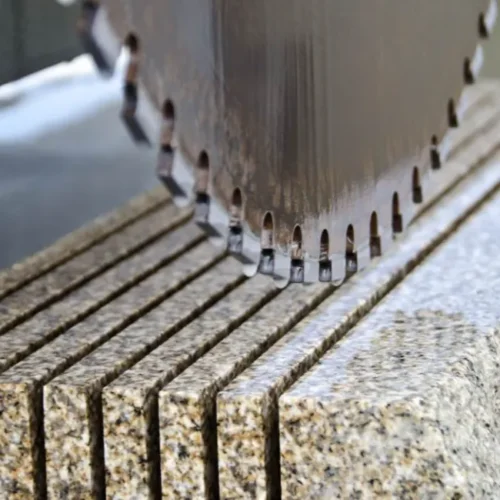
As the modern stone industry continues to move toward automation, intelligent manufacturing, and high-end customization, bridge saws have become one of the most essential pieces of equipment in stone processing factories. From natural marble and granite to quartz stone, sintered stone, porcelain slabs, and luxury stone materials, almost every stage of stone fabrication relies heavily on bridge saw technology. In today’s market, where customers increasingly demand higher precision, faster production, and better visual quality, bridge saws have evolved into a wide variety of models and configurations. Traditional manual bridge saws, semi-automatic bridge saws, CNC bridge saws, four-axis bridge saws, five-axis bridge saws, and intelligent production-line systems now coexist within the industry, each serving different manufacturing purposes.
When many stone factories purchase equipment, they often fall into the misconception that more expensive and more advanced machines are automatically the best choice. However, the reality is far more complex. Different types of bridge saws are designed for different production models, factory sizes, product categories, and business strategies. A factory focused mainly on standardized engineering stone panels may not need the advanced capabilities of a high-end five-axis bridge saw. On the other hand, a factory specializing in luxury custom countertops, sintered stone furniture, or complex artistic fabrication may struggle to compete if it still relies on outdated traditional equipment.
Therefore, comparing bridge saws is not simply about evaluating technical specifications or pricing. The most important consideration is whether the machine matches the actual operational needs of the factory. A well-matched bridge saw can significantly improve efficiency, product quality, and profitability, while an unsuitable machine can become a financial burden and production bottleneck. Understanding the characteristics of different bridge saws and identifying which type is most suitable for different factory models has become increasingly important in the modern stone industry.
The Characteristics of Traditional Bridge Saws and Their Suitable Applications
Traditional bridge saws were among the earliest large-scale cutting machines widely adopted in the stone industry. These machines are typically operated manually, with workers controlling blade movement, cutting dimensions, and cutting directions through mechanical adjustments and operator experience. Although the structure of traditional bridge saws is relatively simple, they played a crucial role in the early development of industrial stone processing.
The biggest advantage of traditional bridge saws is their relatively low investment cost. For factories that aim to minimize equipment expenses and mainly focus on basic cutting operations, these machines still offer certain practical benefits. Small factories that primarily produce floor tiles, engineering slabs, standard-size panels, or basic stone products may still find traditional bridge saws sufficient for daily production.
Another important advantage is maintenance simplicity. Traditional bridge saws have relatively straightforward mechanical structures, making repairs and maintenance easier and less expensive. Factories with limited budgets often appreciate this simplicity because they can reduce operational costs and avoid complicated technical maintenance requirements.
However, the disadvantages of traditional bridge saws have become increasingly obvious in modern manufacturing environments. Since they rely heavily on manual operation, machining accuracy depends largely on operator skill and experience. Human error can easily affect cutting precision and product consistency. In addition, production efficiency is relatively low compared to modern automated systems.
Traditional bridge saws also struggle with complex cutting tasks. Curved cuts, angle cuts, and irregular shapes are difficult or impossible to perform accurately using purely manual systems. As the market increasingly demands higher quality and more customized products, traditional bridge saws have gradually become insufficient for high-end production needs.
Especially with the rapid growth of sintered stone, quartz surfaces, and customized interior design products, relying solely on traditional bridge saws often limits a factory’s competitiveness. Modern customers expect better precision, faster delivery times, and more sophisticated designs, all of which require more advanced equipment.
The Role and Positioning of Semi-Automatic Bridge Saws
Semi-automatic bridge saws represent a transitional stage between traditional manual machines and fully automated CNC systems. These machines combine manual operation with partial automation features such as automatic blade feeding, digital size control, and semi-automatic positioning systems.
Compared to traditional bridge saws, semi-automatic machines significantly reduce operator workload while improving machining consistency. Workers no longer need to rely entirely on manual measurement and positioning. Instead, some parameters can be digitally controlled, reducing human error and increasing cutting precision.
For factories experiencing gradual business growth but not yet ready for full-scale automation, semi-automatic bridge saws provide a balanced solution. They offer noticeable improvements in efficiency and accuracy without requiring the large financial investment associated with advanced CNC equipment.
Semi-automatic bridge saws also reduce the technical skill requirements for operators. Training new employees becomes easier because many repetitive operations are partially automated. For factories that want to modernize production gradually while controlling investment risks, these machines can provide a practical stepping stone toward more advanced manufacturing systems.
However, as CNC technology has become more affordable and widely accessible, the market share of semi-automatic bridge saws has gradually declined. Many factories now prefer to invest directly in fully automated CNC systems because long-term operational efficiency and labor savings often justify the higher initial cost.
How CNC Bridge Saws Transformed the Stone Industry
The introduction of CNC bridge saws fundamentally changed the structure of modern stone processing. Unlike traditional machines, CNC bridge saws use computer numerical control systems to automate cutting operations. CAD drawings and digital production files can be directly imported into the machine software, allowing fully automated cutting path generation and precision processing.
Modern CNC bridge saws typically include automatic measurement systems, programmable cutting sequences, automatic positioning, and intelligent return functions. Some high-end models also feature remote operation capabilities, automatic nesting software, and production optimization systems that improve material utilization and reduce waste.
CNC bridge saws are especially suitable for factories with highly customized or complex order structures. Kitchen countertops, quartz surfaces, bathroom vanities, sintered stone furniture, and architectural decoration projects often involve large numbers of unique dimensions and custom designs. Attempting to process such orders manually would be both inefficient and prone to error.
By automating cutting operations, CNC bridge saws greatly improve production speed, precision, and consistency. Medium-sized and large stone factories increasingly consider CNC systems to be essential equipment rather than optional upgrades.
Another major advantage of CNC bridge saws is their compatibility with digital factory management systems. They can be integrated with ERP systems, MES production systems, barcode tracking systems, and intelligent material management software. This integration allows factories to implement fully digital production workflows and improve overall operational efficiency.
The Core Differences Between Four-Axis and Five-Axis Bridge Saws
As the high-end stone market has expanded rapidly, ordinary CNC bridge saws have become insufficient for certain advanced processing requirements. This has led to the increasing popularity of four-axis and five-axis bridge saw systems.
A four-axis bridge saw adds rotational cutting capability to a standard CNC bridge saw. This allows the machine to perform angled cuts, bevel cuts, and certain types of irregular cutting operations. One of the most common applications is 45-degree miter cutting, which is widely used in countertop fabrication and modern sintered stone installations.
In contemporary kitchen and furniture design, seamless edge finishing and mitered joints have become extremely popular. Four-axis bridge saws can efficiently perform these operations while maintaining high precision and visual quality.
Five-axis bridge saws represent a much more advanced category of equipment. These machines can move and rotate the cutting head in multiple directions simultaneously, allowing highly complex cutting operations. Five-axis systems can produce curved cuts, irregular shapes, sink cutouts, sculptural surfaces, and sophisticated three-dimensional designs.
Some advanced five-axis bridge saws can even replace certain functions traditionally performed by CNC routers or waterjet systems. This reduces the need for multiple machines and improves production efficiency by minimizing workpiece transfer between different processing stations.
Five-axis bridge saws are particularly suitable for high-end custom fabrication factories. Businesses specializing in luxury stone interiors, designer furniture, artistic stonework, and complex architectural elements often require advanced machining flexibility that only five-axis systems can provide.
However, five-axis bridge saws are also significantly more expensive. They require highly skilled operators, advanced programming capabilities, and more sophisticated maintenance. Factories focused primarily on standardized products may not fully utilize the machine’s advanced capabilities, making such investments economically inefficient.
Productivity Differences Between Single-Table and Double-Table Bridge Saws
Beyond differences in automation and cutting capability, bridge saws also vary significantly in worktable design. One of the most important distinctions is between single-table and double-table systems.
Single-table bridge saws have relatively simple structures and require less factory space. They are commonly used in smaller factories with limited production volume or restricted workshop size. Because of their lower cost and smaller footprint, they remain popular in many small and medium-sized fabrication facilities.
However, single-table systems have a major limitation: the machine must stop operating whenever materials are loaded or unloaded. This interruption reduces overall productivity and limits continuous production capability.
Double-table bridge saws solve this issue by allowing one table to operate while the second table is simultaneously loaded or unloaded. This significantly improves production efficiency because machine downtime is minimized.
For factories handling large order volumes, double-table systems provide substantial productivity advantages. In large countertop production operations or major engineering projects, continuous cutting capability can dramatically shorten production cycles and improve delivery speed.
Nevertheless, double-table systems require more factory space and involve higher equipment costs. Smaller factories with limited order volume may not achieve sufficient return on investment from such systems.
The Difference Between Sintered Stone Bridge Saws and Traditional Stone Bridge Saws
The rapid growth of the sintered stone market has created demand for specialized bridge saws designed specifically for processing porcelain slabs and engineered surfaces. Compared to natural stone, sintered stone materials are denser, harder, and often more brittle, requiring greater machine stability and cutting precision.
Traditional bridge saws may struggle with sintered stone processing, leading to edge chipping, cracking, or even complete slab breakage. Specialized sintered stone bridge saws are designed with more stable spindle systems, higher-precision guide rails, and optimized cutting algorithms to address these challenges.
Many sintered stone bridge saws also include vacuum suction systems that stabilize slabs during processing and reduce vibration. Since edge quality is extremely important in high-end sintered stone products, these machines are designed specifically to minimize chipping and improve finish quality.
For factories specializing in sintered stone fabrication, investing in dedicated processing equipment is often essential for maintaining product quality and reducing material waste.
The Collaborative Relationship Between Bridge Saws and Other Equipment
Modern stone factories no longer rely on isolated machines. Instead, they operate integrated production lines where bridge saws cooperate with waterjet systems, edge polishing machines, CNC routers, engraving machines, and automated material handling systems.
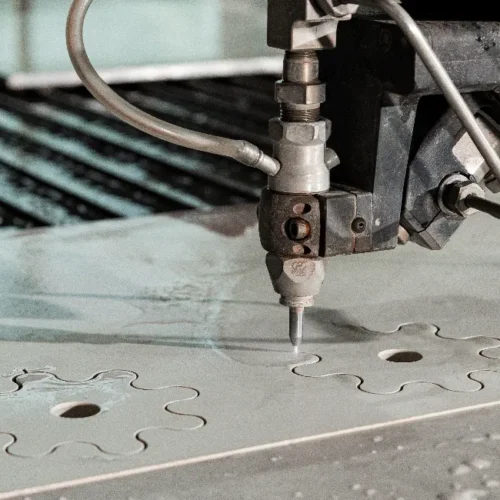
For example, bridge saws typically perform primary slab cutting, while waterjet systems handle complex artistic patterns and intricate shapes. Edge polishing machines complete finishing operations, while engraving machines produce decorative textures and sculptural details.
This integrated manufacturing approach means factories must evaluate bridge saw compatibility with the entire production system rather than considering only the machine itself.
High-end bridge saws increasingly emphasize intelligent connectivity, robotic loading compatibility, MES integration, and automatic nesting optimization. In smart factories, bridge saws are becoming central processing nodes within highly automated production ecosystems.
Future Trends in the Bridge Saw Industry
As the stone industry continues evolving, bridge saw technology is moving rapidly toward greater intelligence, automation, and unmanned production capability.
Artificial intelligence is expected to play an increasingly important role in future bridge saw systems. AI-based technologies may enable automatic stone texture recognition, cutting path optimization, defect detection, and intelligent production scheduling.
Automation levels will also continue rising. Future large-scale stone factories may achieve fully automated production from slab loading to cutting, sorting, and packaging with minimal human intervention.
Environmental sustainability is another major development direction. Modern bridge saw manufacturers are introducing energy-efficient motors, advanced cooling systems, water recycling technologies, and dust reduction systems to improve environmental performance.
Equipment integration is also becoming increasingly important. Future bridge saws may combine cutting, edging, drilling, and certain engraving functions within a single machine platform, reducing workflow complexity and improving production efficiency.
Different Bridge Saws for Different Factory Models
Ultimately, there is no universally “best” bridge saw. Different machines are designed for different factory structures and production strategies.
Factories with limited budgets and relatively simple production requirements may still find traditional or semi-automatic bridge saws practical and economically viable.
Medium-sized factories seeking higher efficiency and greater processing flexibility are often best served by CNC bridge saw systems.
High-end custom fabrication factories, sintered stone processing plants, and fully automated intelligent factories benefit most from advanced four-axis, five-axis, and double-table bridge saw systems.
In the future, competition in the bridge saw industry will no longer focus solely on equipment pricing. Instead, success will depend increasingly on how well the machine matches the operational model of the factory. The most valuable bridge saw is not necessarily the most advanced one, but the one that best supports a factory’s long-term production strategy and market positioning.
As intelligent manufacturing continues to reshape industrial production, bridge saws are evolving from simple cutting machines into critical drivers of modernization within the global stone processing industry.