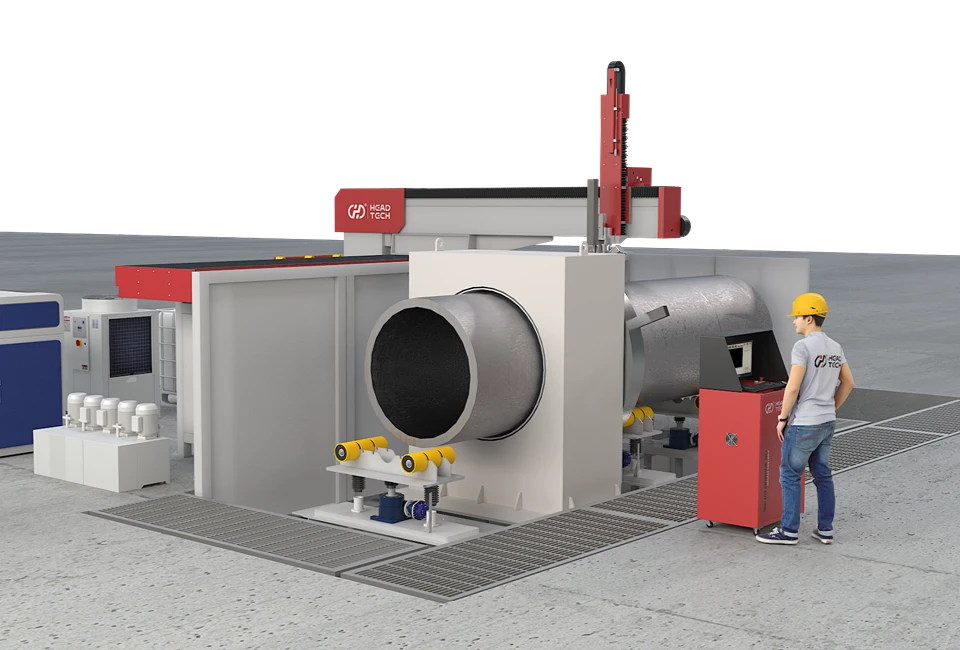
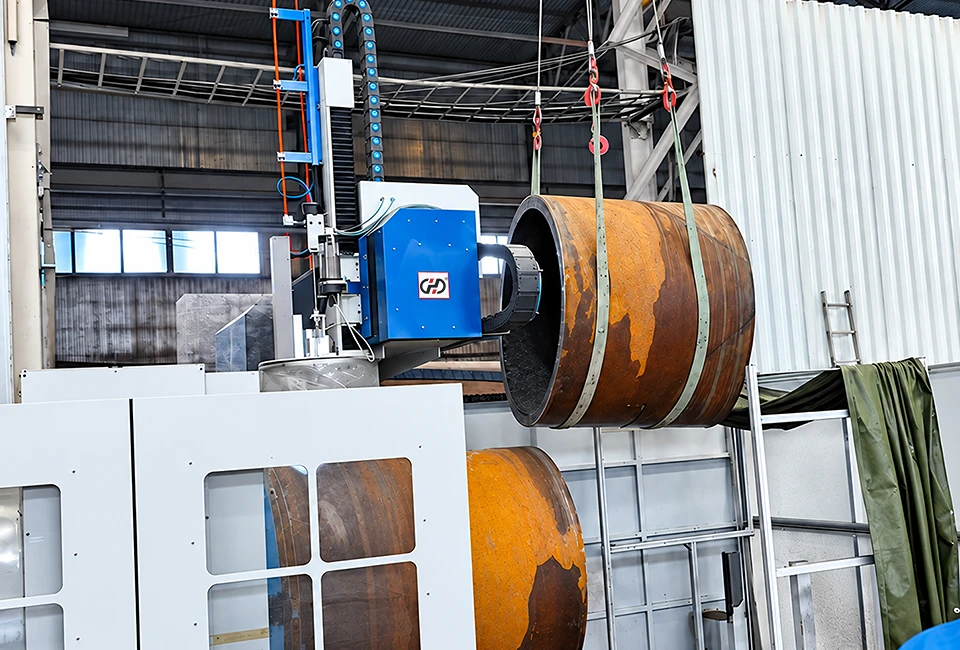
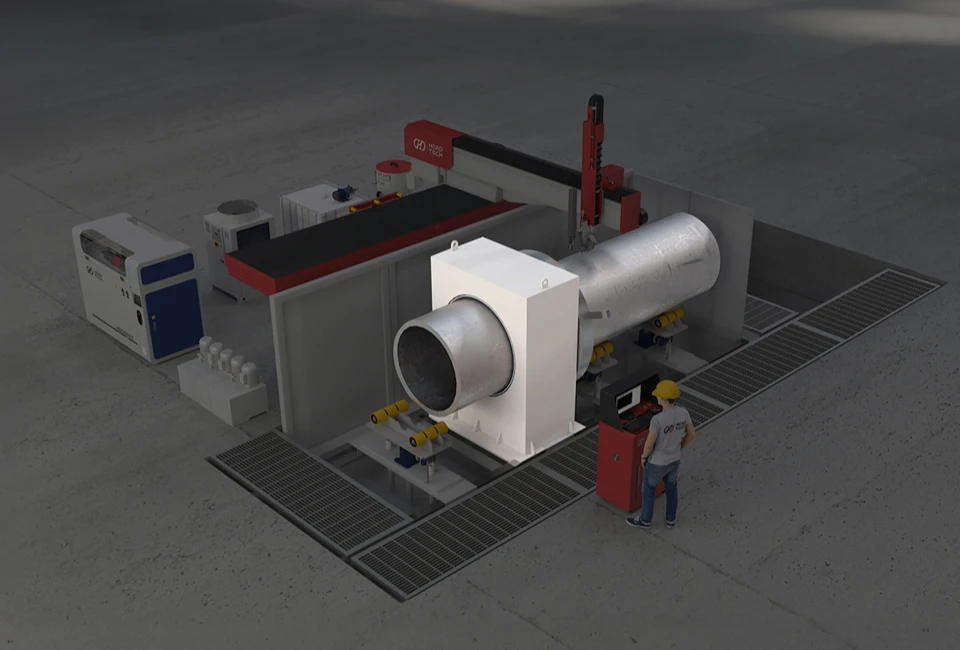
Choosing a waterjet pipe cutting machine should begin with the pipe application, not with a model name or a maximum specification. Material, diameter, wall thickness, cut geometry, production volume, edge quality, factory or field use, support, loading, water handling, and automation all influence the correct system. Quick selection rule: define the pipe, cut, quantity, and […]
Composite pipes such as FRP, GRP, carbon-fiber laminates, and lined multi-layer pipes can be cut with abrasive waterjet, but clean results depend on the laminate structure and the cutting method. The main risks are delamination, fibre pull-out, liner separation, edge breakout, and loss of dimensional accuracy. Short answer: abrasive waterjet can reduce thermal damage and […]
The best pipe cutting method depends on material, wall thickness, diameter, production volume, edge requirements, site conditions, and the next manufacturing operation. Waterjet, laser, sawing, plasma, and mechanical cold cutting each solve a different combination of problems. A process that is efficient for thin-wall steel tube may be unsuitable for FRP, composite, coated, or large-diameter […]
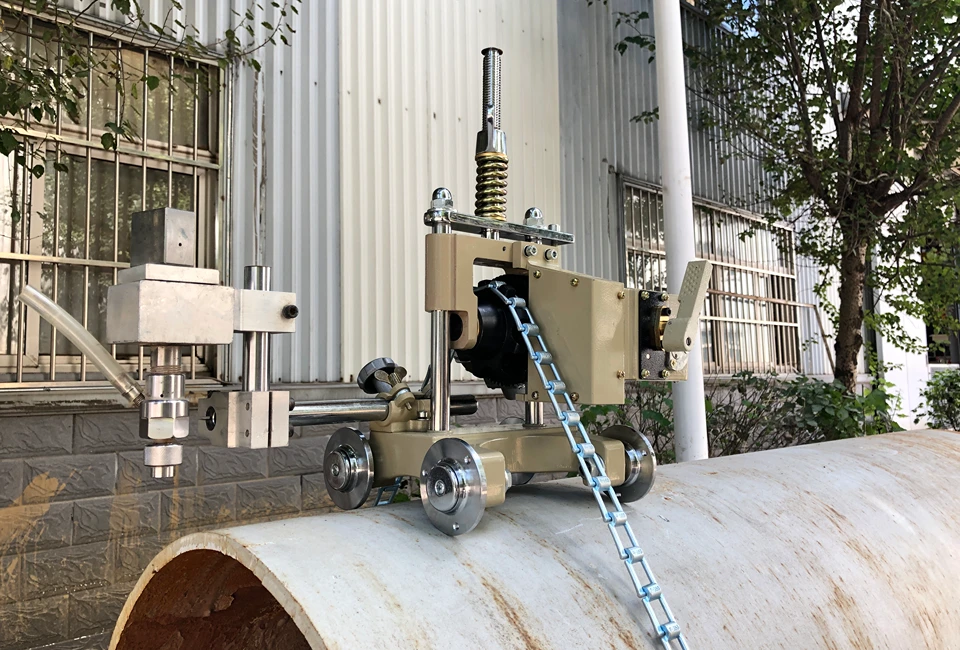
On-site pipeline cutting is different from factory tube processing. The pipe may be large, fixed in place, difficult to access, contaminated, pressurized, or surrounded by equipment that cannot be moved. A portable waterjet pipe cutter can be considered when the work requires a lower-thermal-input cutting method and the pipe must remain on site. Quick answer: […]
Cutting pipes over one meter in diameter requires more than a larger cutting head. The equipment must control pipe weight, support, rotation, alignment, clamping, loading, water management, and the cutting path. Large-diameter pipes may be made from carbon steel, stainless steel, duplex steel, FRP, GRP, composite, or multi-layer structures, and each material changes the process […]
FRP and GRP pipes are both fibre-reinforced polymer products, but their reinforcement, resin system, winding pattern, liner, and application can vary considerably. Those differences affect how the pipe should be cut. A process that works for one fiberglass pipe may cause dust, fibre pull-out, delamination, ovalization, or poor edge quality on another. This guide compares […]
Fiberglass pipe is commonly manufactured from glass fibres embedded in a polymer resin, often called FRP or GRP pipe. Cutting fiberglass pipe is not the same as cutting ordinary steel tube: the process must control dust, fibre pull-out, delamination, edge damage, support, and dimensional stability. Abrasive waterjet cutting is often a strong process to evaluate […]
Choosing between abrasive waterjet and laser tube cutting depends on the pipe material, wall thickness, diameter, production volume, required edge quality, and whether the work is performed in a factory or on site. Laser tube cutting is often efficient for thin-wall metal tubes and repeat production. Abrasive waterjet is usually more flexible when the job […]
 English English
 Chinese