x
H e a d c n c
Associates
HEAD waterjet
Industrial waterjet pipe cutting manufacturer

Pipe cutting machine

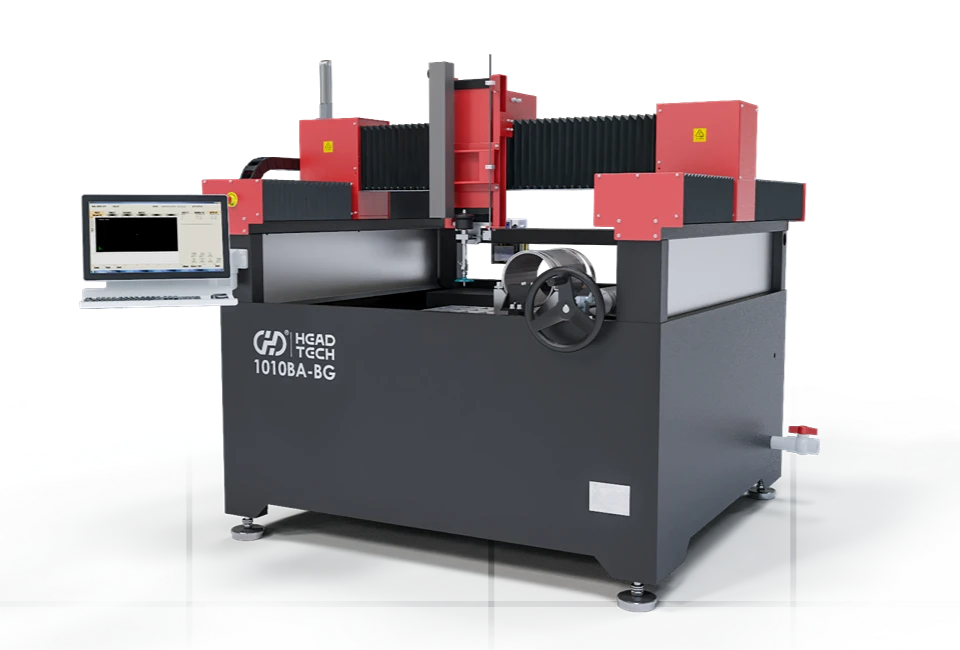
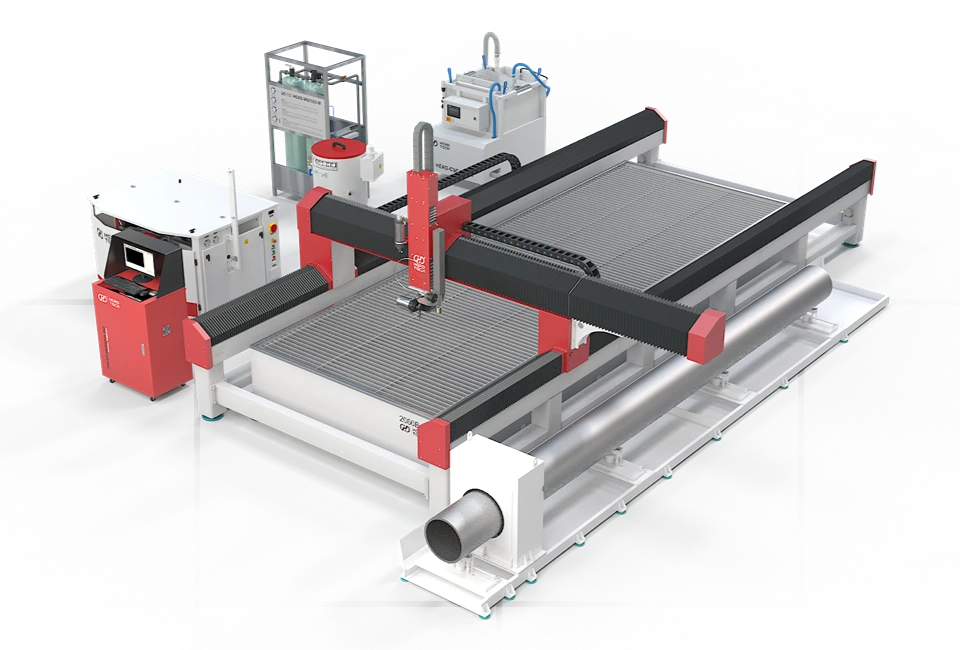
Waterjet pipe cutting uses a high-pressure water stream combined with abrasive to achieve cold cutting without creating a heat-affected zone. It helps prevent thermal deformation, melting, and heat damage. Suitable for metal, FRP/GRP, composite, and multilayer pipes, it supports thick-wall cutting, complex profiles, hole cutting, and beveling, offering excellent material versatility, cutting precision, and processing flexibility for demanding industrial pipe applications.

These operations can be challenging when pipelines are already installed, workspaces are restricted, or the workpiece is too large to transport to a stationary cutting machine.

Typical Applications

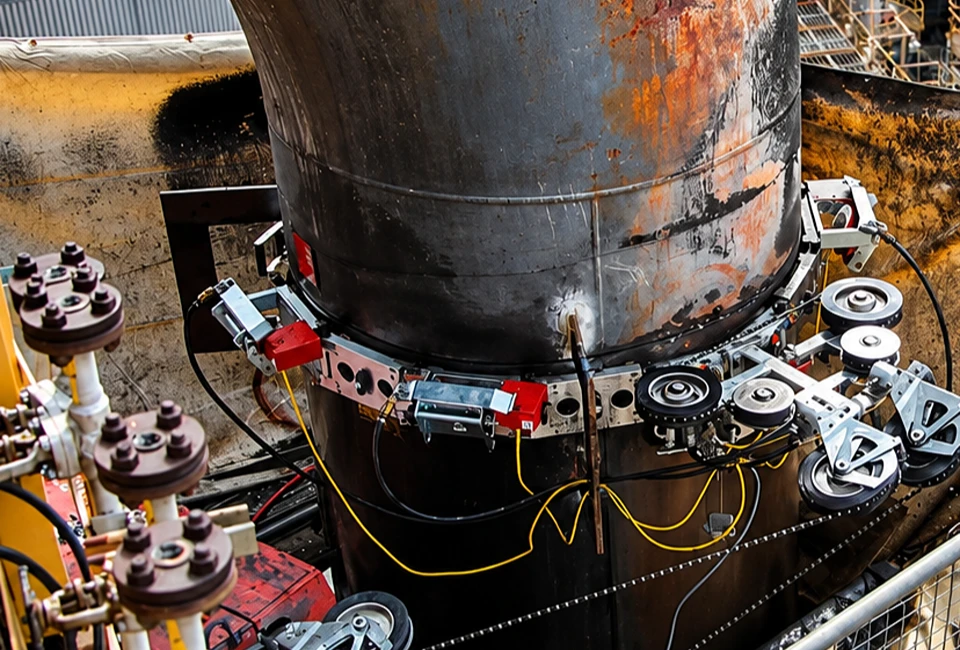
Assessing guided cutting solutions for large cylindrical structures that are difficult to move to a conventional cutting table.

Cutting out selected pipe sections during planned maintenance or replacement work, subject to the approved isolation and work procedure.

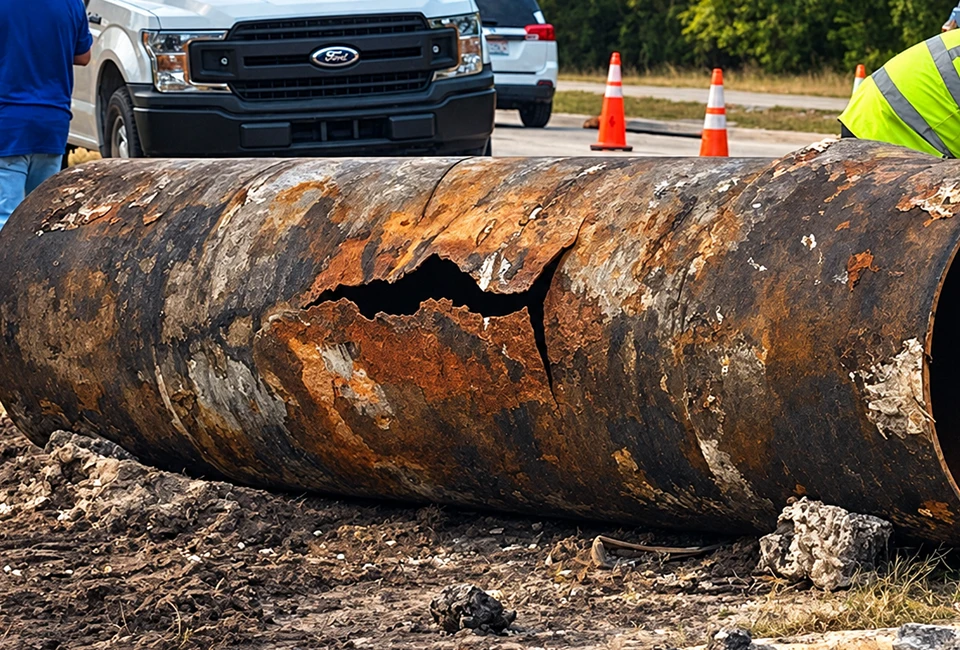
Evaluating suitable cutting arrangements for removing damaged or corroded pipe sections while accounting for the remaining wall condition and available attachment surfaces.

Supporting specified cutting operations when the workpiece must remain at its installation location.

Expertly Recommended Solutions

Why Consider Waterjet for Petrochemical Pipe Cutting?

Low-Thermal-Input Cold Cutting

Waterjet cutting avoids the conventional heat-affected zone associated with thermal cutting processes. It can be considered when heat-related changes to the workpiece need to be minimized.

Portable Equipment for On-Site Work

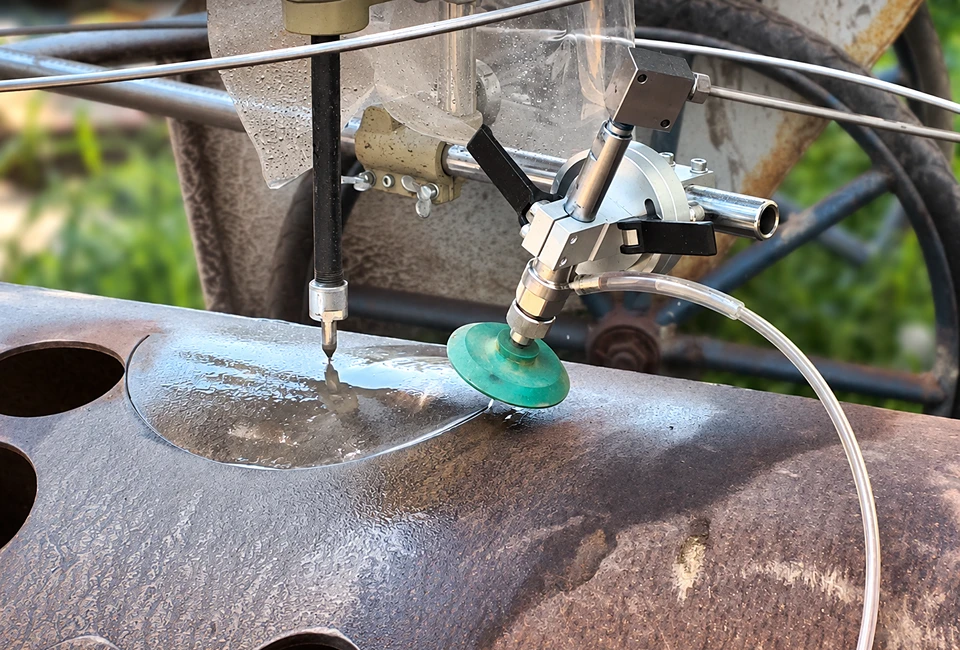
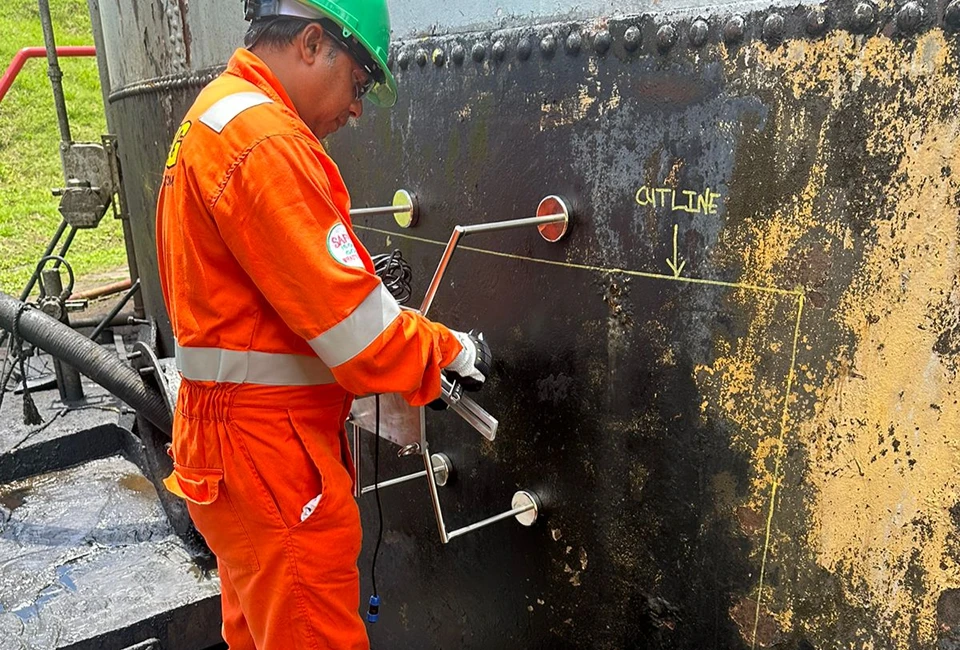
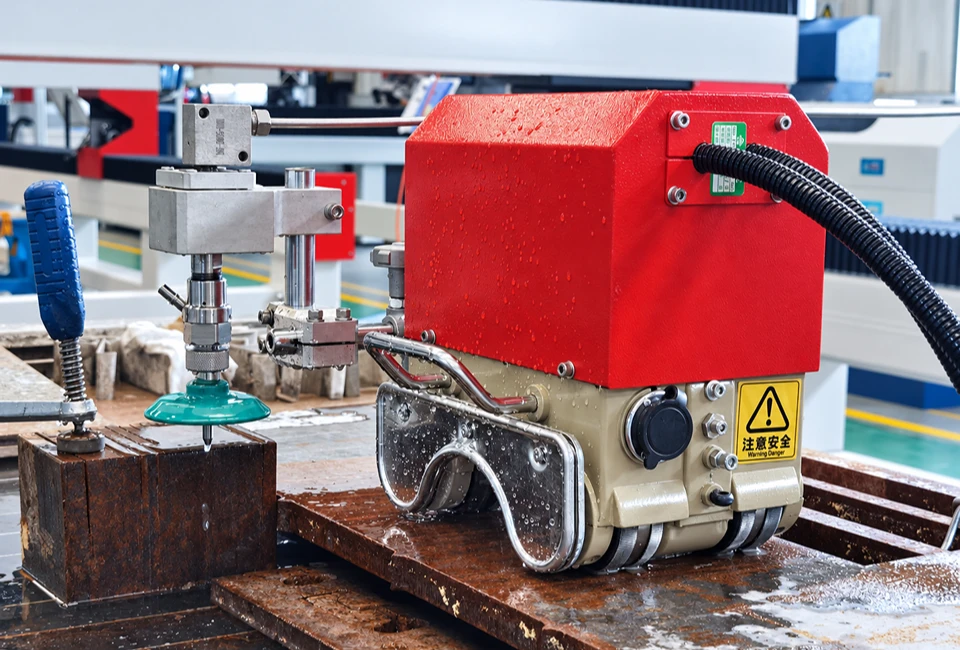
When a pipe cannot easily be moved to a stationary cutting table, a portable waterjet arrangement may allow the cutting equipment to be positioned on a suitable workpiece surface. The appropriate fixture depends on pipe diameter, surface condition, attachment requirements, and available working space.

Flexible Cutting Geometries

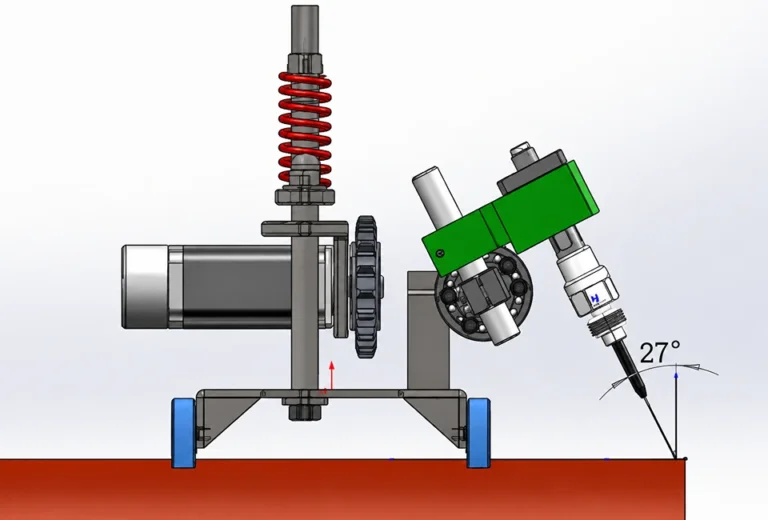
Depending on the selected fixture and validated configuration, the DP Series supports applications involving circumferential cutting, circular openings, guided profile cutting, and bevel cutting up to 45° with specified fixtures.

Why Is Petrochemical Pipe Cutting Different?

Petrochemical cutting projects are not defined by pipe diameter alone. The workpiece condition, installation environment, cutting requirements, and site safety controls all influence the solution.

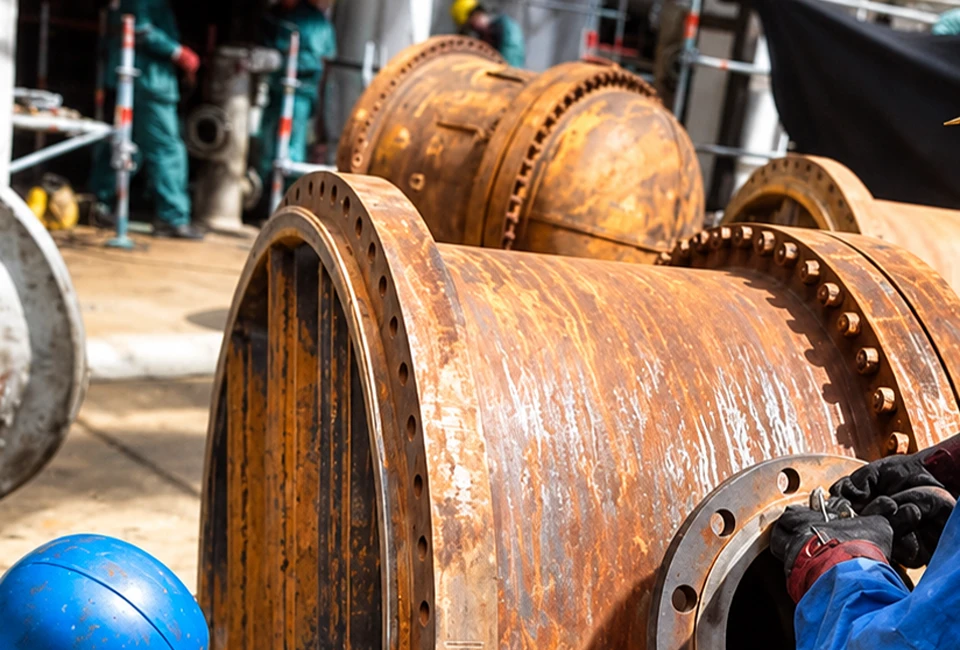
Restricted Access and Installed Pipelines

Pipelines may be positioned close to surrounding structures or installed equipment. Bringing a large workpiece to a stationary machine may require additional handling or may not be practical.

Corrosion and Changing Surface Conditions

Corrosion can affect wall thickness, surface condition, and the suitability of attachment points. For magnetic or chain-guided fixtures, the available contact surface and fixture stability must be assessed before a configuration is selected.

Different Pipe Diameters and Wall Thicknesses

Petrochemical facilities may contain pipes of different dimensions and materials. A fixture suitable for one pipe may not be appropriate for another.

Hazardous-Area and Site Restrictions

A petrochemical site may have specific requirements relating to hazardous-area classification, residual media, internal pressure, equipment certification, wastewater handling, and work authorization.

Thermal Input and Edge Requirements

Where conventional thermal cutting is unsuitable or requires additional consideration, waterjet cutting can be evaluated as a low-thermal-input cold-cutting alternative.

Why Do Large-Diameter Pipes Require a Customized Solution?

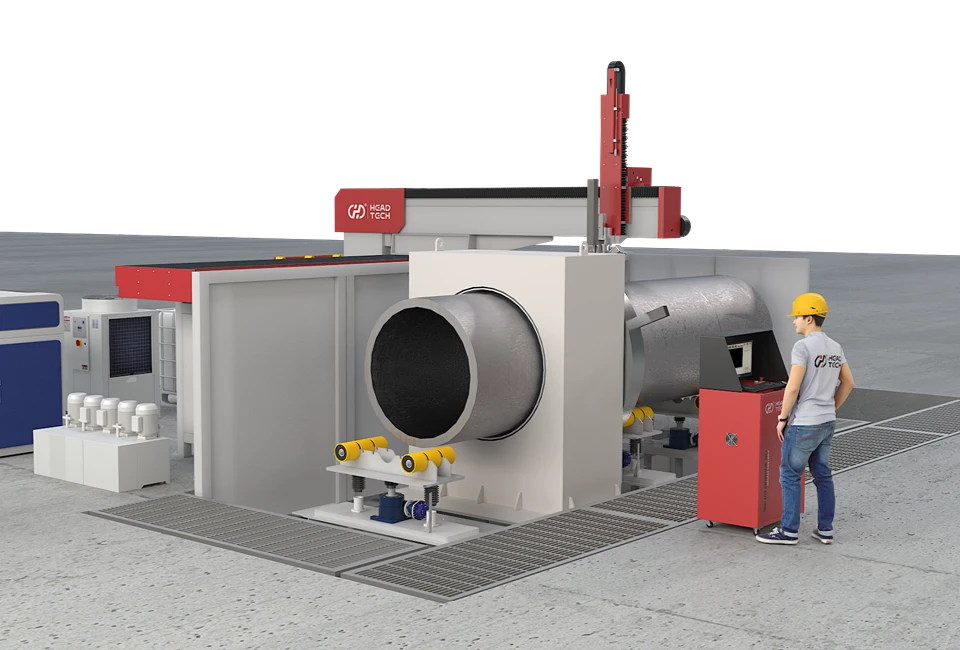
Standard cutting equipment may not adequately address every large-pipe application. The challenge often lies not only in the cutting process but also in workpiece handling, fixture design, motion coordination, and the working environment.

Submit Your Petrochemical Pipe Cutting Requirements

Need to cut a pipe section, replace a corroded segment, or evaluate an on-site cutting method? Share the workpiece information and site requirements with HEAD WATERJET. Our team can review the application and determine what additional information is needed to assess the cutting process and equipment configuration.

Pipe Information

Material and grade

Outside diameter

Wall thickness

Pipe length and estimated weight

Current surface condition

Whether the pipe is installed or removable

Cutting Requirements

Required cutting location and geometry

Circumferential cutting, opening, bevel, or other profile

Required dimensional tolerances

Expected edge condition

Production or maintenance requirements

Site Conditions

Available access and installation space

Attachment-surface conditions

Applicable site restrictions and hazardous-area requirements

Isolation and work authorization status

Water collection and residue-management requirements

Supporting Files

Pipe drawings or CAD files

Workpiece photographs

Cutting-location drawings

Available material and inspection records

Waterjet, Laser or Plasma: Which Should You Choose?

Evaluation Factor Waterjet Pipe Cutting Laser Pipe Cutting Plasma Pipe Cutting
Pipe Diameter and Length HEAD DP Series fixtures cover different ranges: magnetic carriage 120–1,850 mm; magnetic track carriage 800–10,000 mm; chain carriage 150–1,850 mm. Best suited to tubes that fit the machine's chuck, loading system, and working envelope. Handheld and guided tools suit field cutting; mechanized systems can handle larger pipes with dedicated supports.
Wall Thickness Listed range: 5–80 mm for the DP Series magnetic carriage, magnetic track carriage, and chain carriage. Actual performance requires validation. Particularly effective for thin- and medium-wall tubes requiring precise, repeatable cuts. Suitable for a range of metal pipe thicknesses, including heavier sections with appropriately rated equipment.
Cutting Speed Generally slower on thin metal, but useful when low thermal input or on-site access is important. High speed for repetitive, precision tube cutting, especially in automated production. Productive for metal pipe fabrication, section removal, and field maintenance.
Heat-Affected Zone and Edge Quality Avoids conventional thermal HAZ and heat-induced melting. Cut taper, striations, and roughness depend on cutting parameters. May produce a heat-affected zone, oxidation, or dross; typically offers narrow, precise cuts. May produce a heat-affected zone, slag, and a wider cut; edge grinding may be needed.
Cutting Geometry Supports circumferential cuts, openings, and defined profiles with compatible fixtures. Selected DP Series fixtures support bevel cutting up to 45°. Well suited to precise holes, slots, notches, and complex programmed tube profiles. Suitable for section cutting, holes, notches, and pipe-end bevel preparation with appropriate guides or mechanized systems.

Portable Equipment for On-Site Work

Choose Waterjet When
Waterjet cutting is suitable when pipes are difficult to move to a stationary machine, low thermal input is required, or the application involves different materials and composite structures. A compatible portable system or customized fixture can provide flexibility for on-site and specialized cutting tasks.
Choose Laser When
Laser cutting is ideal for workshop-based production when pipes fall within the machine's rated diameter, length, and wall-thickness range. It suits applications requiring high productivity, repeatable results, and precise programmed profiles, especially when automated loading, positioning, and unloading can be integrated.
Choose Plasma When
Plasma cutting is suitable for electrically conductive metal pipes, particularly in field cutting, pipe section removal, bevel preparation, and repair work. Depending on the application, handheld, guided, mechanized, or robotic systems can be used, provided thermal input and hot-work risks are managed under approved site procedures.
Send a Message

Feel Free to Say Hello or Send Your Questions

Complete the enquiry form & we will be in touch as soon as possible.